MYANMAR PHOTOGRAPHER’S GRAND EXPEDITION
Yangon · Myeik · The Mergui Archipelago · The Moken Sea Gypsies · Kawthaung Liveaboard · Ranong
10 Days / 9 Nights • Private Photographic Expedition • December 2026
From the gilded spire of the Shwedagon to the four-night silence of a private liveaboard anchored off three different Moken villages — the definitive photographic journey through southern Myanmar, ending across the Pakchan estuary in Thailand.
Tour Code: MGE — MYANMAR GRAND EXPEDITION
Departure Window: 1 – 31 December 2026 • Group of 6 – 8 photographers
Welcome, Photographers
Of all the journeys we operate across Southeast Asia, this is the one we most look forward to each December. It begins in Yangon — the colonial-era capital where gilded pagodas rise out of monsoon-washed streets — and unfolds over ten unhurried days down the Tanintharyi coast, into the Mergui Archipelago, and finally aboard a private liveaboard chartered entirely to your group for four nights among the Moken Sea Gypsies of the southern Mergui.
The trip is built around four distinct photographic chapters: the heritage and street life of Yangon; the working shipyards, market lanes and sunset pagodas of Myeik; an intimate cultural visit to the Moken village at Dome Nyaung Mai; and a four-night liveaboard expedition visiting three further Moken settlements — Nyaung Wee, Jar Own and Jar Lann — in the rarely-photographed southernmost Mergui. December gives us the conditions to do all of it justice: calm seas, low humidity, exceptional underwater visibility, and ten hours of workable light per day.
The boat sleeps a maximum of eight photographers in twin-share cabins and is dedicated entirely to your group. Pacing is deliberately slow. Permissions are arranged in advance. The guide, the captain and the cultural fixer have long-standing relationships with every village we visit. This is not a beach holiday with a camera — it is a photography expedition that happens to take place in some of the most beautiful islands on earth.
Why You Should Go
Few places in maritime Southeast Asia still offer what southern Myanmar offers in December. Here is what sets this expedition apart:
- A genuinely closed coastline. The southern Mergui Archipelago saw only a handful of foreign visitors per year before 2018, and remains effectively off-limits to all but private charters. You will not share these bays with anyone.
- Four Moken communities, not one. Other operators visit a single Sea Gypsy village. We visit four — Dome Nyaung Mai by speedboat from Myeik, then Nyaung Wee, Jar Own and Jar Lann by private liveaboard. Each village has its own headman, its own boat-building tradition and its own visual character.
- December weather. Cool dry season — 28–31°C, low humidity, minimal rainfall, the northeast monsoon flattens the sea, underwater visibility 10–20 m, and the southern winter constellations are visible from the boat through every night.
- Permission-first photography. Every village visit is brokered in advance with the elders. No individual cash for portraits — a transparent communal contribution. Post-trip prints are returned to each village. The relationships are real and long-standing.
- Photographer-built pacing. Early starts on demand, no fixed shore-time pressure, the captain will reposition the boat for the frame you want, and the guide is briefed on photographic priorities rather than tourist priorities.
- A private charter, not a shared boat. The liveaboard is yours — your crew, your group, your pace. Maximum 8 photographers in twin-share cabins. No mixing with strangers.
- A signature exit route. The final day crosses the Pakchan estuary by private longtail — the most distinctive border frame in Southeast Asia — from Myanmar into Ranong, Thailand. Two countries within sight of each other under two flags, photographed from the water.
- Three dark-sky astrophotography nights. Zero light pollution. Occasional bioluminescence in the bays. The Milky Way visible from the upper deck for the full four nights aboard.
At a Glance
| Tour Code | MGE — MYANMAR GRAND EXPEDITION |
| Duration | 10 Days / 9 Nights |
| Style | Cultural photography · archipelago sightseeing · private-charter liveaboard |
| Group Size | Minimum 6, maximum 8 photographers (single private charter) |
| Departure Window | 1 – 31 December 2026 (custom dates by arrangement) |
| Best For | Documentary, cultural, landscape and travel photographers |
| Start | Yangon International Airport (RGN), Myanmar |
| End | Yangon International Airport (RGN) — via Ranong (Thailand) and an overnight Yangon return |
| Accommodation | 2 nights Yangon 4★ · 2 nights Myeik 3★ · 1 night The Mera Resort · 1 night Kawthaung 3★ · 3 nights aboard private liveaboard |
| Cultural Focus | Four Moken villages: Dome Nyaung Mai (Myeik), Nyaung Wee, Jar Own and Jar Lann (Kawthaung archipelago) |
| Physical Level | Easy to moderate — boat boarding, beach landings, pagoda steps, optional snorkelling |
| Languages | English-speaking photographer-experienced guide throughout |
| Currency | USD onboard; MMK in Myanmar towns; THB on Day 10 in Ranong |
Tour Highlights
- A guided photographer’s afternoon in Yangon — Shwedagon Pagoda golden hour, the colonial downtown grid, Bogyoke Aung San Market and Kandawgyi Lake.
- Sunset at Thein Daw Gyi Pagoda — the gilded spire over the Andaman horizon, signature image of Myeik.
- A working teak shipyard where fishing boats are still hand-built — strong morning light, environmental portraits.
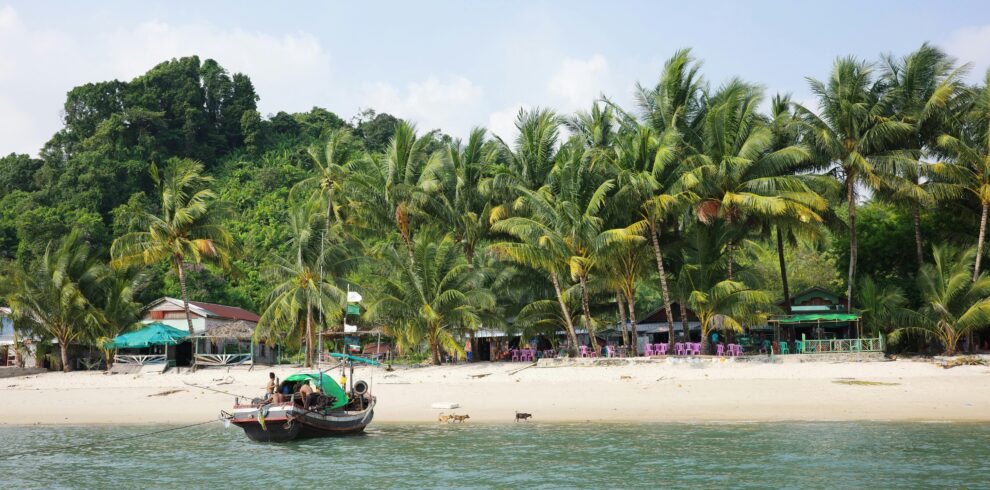
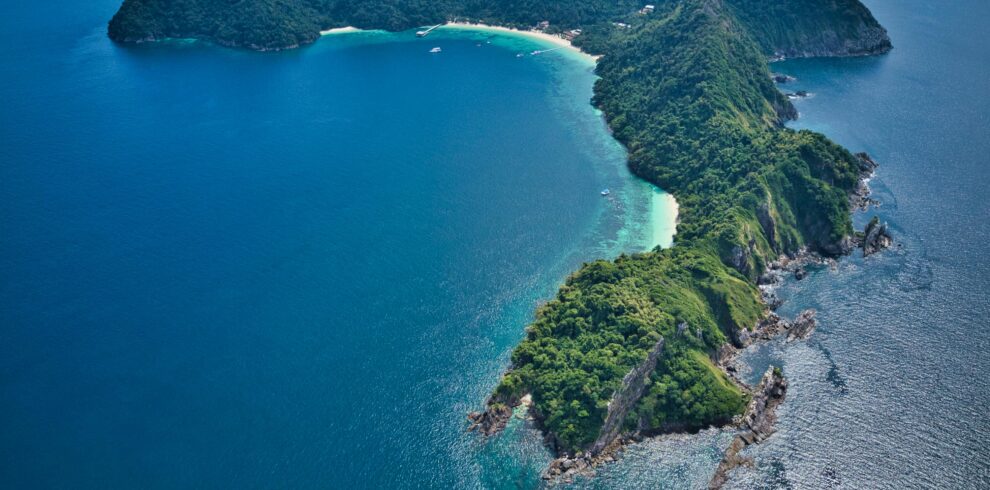
- Two contrasting archipelago landings — Bailey Island’s powder sand and Smart Island’s pebbled ‘Stone Beach’ cove.
- An overnight at The Mera Resort — a private islet directly opposite the Moken village, ideal for blue hour and astrophotography.
- A morning at the Moken Sea Gypsy village of Dome Nyaung Mai — the trip’s first cultural centrepiece, arranged with permission and respect.
- A four-night private charter on a dedicated liveaboard — your boat, your crew, your pace.
- Three further Moken village visits by liveaboard — Nyaung Wee, Jar Own and Jar Lann — each with its own foreshore and community.
- Permission-first cultural photography, brokered by the captain and a local cultural fixer with long-standing village relationships.
- Sunrise and sunset shoots every single day, from anchor or ashore.
- Three nights of dark-sky astrophotography — zero light pollution, southern winter constellations, occasional bioluminescence in the bays.
- Kawthaung city circuit — the Bayinnaung statue, Pyi Daw Aye Pagoda, the busy fish market and a hilltop viewpoint over the Pakchan estuary into Thailand.
- Snorkelling and free-diving stops at remote coral gardens between the villages.
- Onboard cuisine of fresh-caught seafood, prepared by a Burmese chef who has cooked for our charters for over a decade.
- The signature Pakchan estuary border crossing — private longtail boat across the frontier from Kawthaung to Ranong, Thailand.
Itinerary
Touch down in Myanmar’s former capital and ease straight into the trip with a curated half-day of Yangon’s most photogenic ground — the gilded heart of Burmese Buddhism, the colonial grid laid down by the British in the 1850s, the market that has been the city’s commercial pulse for a hundred years, and the sunset terrace where every photographer’s first Myanmar trip should end.
Detailed Programme
| TIME | PROGRAMME |
| On Arrival | Meet your guide and driver in the Arrivals Hall of Yangon International Airport (RGN). Welcome briefing, SIM card and small-USD-notes assistance, and short transfer (approximately 45 minutes, traffic-dependent) to your 4-star hotel in central Yangon. |
| From 11:00 | Hotel check-in (early check-in pre-arranged for the group). Time to freshen up, shower off the long-haul flight, and reset cameras to local time. |
| 12:30 | Welcome lunch at a long-established local restaurant in the downtown lanes — a proper introduction to Burmese cuisine: lahpet thoke (tea-leaf salad), mohinga, a curry spread and traditional sweets. |
| 13:45 | Briefing and departure for the afternoon photo circuit. Bring one camera body plus a wide and a short telephoto. Tripod optional for Shwedagon. |
| 14:00 | Stop 1 — Sule Pagoda & the Colonial Downtown Grid. A slow walk around Sule Pagoda (the 2,000-year-old golden stupa at the literal centre of Yangon’s street plan), then a guided stroll east along the colonial avenues — Pansodan Street, the old High Court, the Secretariat façade, the Strand Hotel and the Yangon Heritage Trust’s plaque trail. Strong material for environmental street portraits and architectural detail. |
| 15:30 | Stop 2 — Bogyoke Aung San Market (formerly Scott Market). Built in 1926, still the city’s great covered bazaar. Jade, longyis, lacquerware, jewellers, calligraphers, sweet sellers. Quiet shutter, single-shot, ask before close portraits — your guide will broker introductions with the regular stall holders. |
| 16:15 | Brief tea-shop stop at a classic Burmese tea-shop on the way north — strong process material (the kettle, the milk pour, the laminated paratha), 5 minutes of rest, and a chance to recalibrate exposure for late afternoon. |
| 16:45 | Stop 3 — Kandawgyi Lake & the Karaweik Palace. Lakeside boardwalk, mirror reflections of the Shwedagon stupa across the water, and the brass-and-mosaic Karaweik royal-barge replica catching west light. A 70–200mm telephoto compresses the spire beautifully into the lake horizon. |
| 17:15 | Transfer to Shwedagon Pagoda — western entrance. Remove shoes, store in the secure shoe-lock. Cameras out (Shwedagon is one of the few major Buddhist sites in Southeast Asia where photography is openly welcomed; please respect the prayer halls). |
| 17:45 | Golden hour on the Shwedagon platform. The 99-metre gilded stupa, 2,500 years old by tradition, plated with thousands of bars of solid gold and crowned with a 76-carat diamond at the apex. Sunset hits the eastern face around 18:05. Stay on the platform through blue hour — the floodlights warm to a deep amber tone as the sky goes cobalt and the chanting begins. |
| 19:00 | Wind-down on the platform — long exposures of the lit stupa, monks circling, oil-lamps in the four cardinal shrines. Pack up at your own pace. |
| 19:45 | Welcome dinner at a celebrated Burmese restaurant near Shwedagon — white curry, hin-cho soup, prawn-and-pomelo salad, traditional desserts. Programme briefing for the morning flight south. |
| 21:30 | Transfer back to the hotel. Pack a small daypack for tomorrow’s flight; main luggage goes with you. Early night — 06:00 wake-up. |
| Night | Overnight in central Yangon (4-star hotel, twin-share with breakfast). |
Photographer’s Notes — Day 1
- Light plan: the afternoon is built around two golden hours — 17:00–18:00 at Kandawgyi (back-lit stupa from the lake) and 17:45–19:00 at Shwedagon (front-lit then floodlit on the platform). Plan your battery and card swaps around 17:15.
- Lenses for the circuit: a fast wide (24–35mm) for downtown architecture, a portrait length (35mm or 50mm prime) for market and tea-shop work, a short telephoto (70–200mm) for the Kandawgyi compression and Shwedagon platform compression. A 16mm or wider helps inside the four cardinal shrines.
- Shwedagon etiquette: shoulders and knees covered for both men and women. No shoes or socks above the marble — walk barefoot from the lock-up. Do not photograph people in prayer without permission; do not use flash inside the prayer halls; do not point soles of feet at Buddha images. Tripods are permitted on the platform.
- Market portraits: Bogyoke Market closes at 17:00 so we deliberately arrive at 15:30 for the best two hours of golden lateral light through the high glass roof. A 50mm f/1.8 on a single body is the lightest, most respectful kit.
- Tripod logistics: bring it to Shwedagon (genuinely useful for blue-hour long exposures of the stupa) but leave it at the hotel for the downtown walk — it slows the group and draws unwanted attention.
- Traffic notice: Yangon afternoon traffic is severe. Stops are scheduled with realistic buffers. Stay close to the guide on the move — photographers wander, and the group can lose 15 minutes recovering one straggler.
- Backup tonight: copy the Yangon afternoon’s cards to your laptop or SSD before bed. Tomorrow is a 06:00 wake-up for the Myeik flight and you will not want to be sorting cards on the plane.
- If your flight lands late afternoon instead of morning: the programme converts to a Shwedagon-only sunset session followed by welcome dinner, with Sule, downtown and Bogyoke moved to Day 10’s return Yangon window. Notify the operator of your inbound flight time at the time of booking.
Yangon — City Profile for Photographers
Yangon (formerly Rangoon) was Burma’s capital from the 1850s under British colonial rule until 2005, and remains the country’s largest city and commercial centre. Its grid of colonial-era avenues — laid down by Lieutenant Alexander Fraser of the Royal Engineers in 1852 — contains the largest surviving collection of late-19th-century British colonial buildings anywhere in Southeast Asia. Above the grid rises the Shwedagon Pagoda, the most sacred Buddhist site in Myanmar, said to enshrine relics of four Buddhas including eight hairs of Gautama Buddha. For photographers, the combination is unique: a working colonial-era downtown still inhabited by Burmese commerce, ringed by gilded Buddhist architecture, and lit through December by the warm raking light of the dry season.
A short flight south brings us to Myeik on the Tanintharyi coast. An easing-in day: working life on the riverbank in the morning, three of Myeik’s defining viewpoints in the afternoon, and a golden-hour finish on the Andaman skyline.
Detailed Programme
| TIME | PROGRAMME |
| 06:00 | Wake-up call. Pack and check out. |
| 06:30 | Transfer to Yangon International Airport (RGN). Domestic check-in for the morning flight south to Myeik (MGZ). |
| 08:00 | Depart Yangon. Flight time approximately 1 hour 40 minutes. |
| 07:30 (local) | Pick-up at Myeik Airport on arrival. Welcome briefing and short transfer into town. (Note: Myeik flights vary by airline; the schedule is built around the morning service.) |
| 08:00 | Breakfast at a popular local restaurant — Myanmar tea, mohinga, paratha. Check-in at your 3-star hotel; quick freshen up. |
| 09:00 | Start of the Myeik City photo route. First stop — the Local Shipyard, where teak fishing boats are still hand-built. Carpenters, sawyers, painters in raking morning light. |
| 10:30 | Natural Bird’s Nest House — a fascinating small-business scene, with workers in process. Strong environmental portraits. |
| 11:30 | Yan Kin Taung Pagoda — sweeping view over the river, paddy fields and tin-roofed neighbourhoods. Wide-angle and telephoto compression both work here. |
| 12:00 | Lunch at a local restaurant — Burmese-Chinese seafood menu. |
| 13:30 | Lobster Farming Area — boardwalks over cages, weathered fishermen, working scenes. |
| 15:00 | Walk through the ‘Welcome to Myeik’ sign and the colonial-era downtown lanes; pause for street portraits and tea-shop scenes. |
| 17:00 | Climb to Thein Daw Gyi Pagoda for golden hour. Set up early to claim a tripod position. |
| 18:00 | Sunset. The pagoda’s gilded spire catches the last red light over the river mouth — the signature image of Myeik. |
| 18:30 | Dinner at a local restaurant near the pagoda. |
| 20:00 | Return to hotel. Optional night walk along the lit waterfront for long-exposure work. |
| Night | Overnight in Myeik (3-star hotel, twin-share with breakfast). |
Photographer’s Notes — Day 2
- Lenses: a fast wide (24–35mm) for the shipyard interiors, a portrait length (50–85mm) for the workers, and a telephoto (70–200mm) for the pagoda compression at sunset.
- Best light: 09:00–10:30 at the shipyard (raking morning side-light) and 17:30–18:15 at Thein Daw Gyi (the ‘magic 45 minutes’).
- Portrait etiquette: your guide will ask permission first. A polite ‘mingalaba’ goes a long way.
- Tripod: useful at the pagoda; not essential elsewhere on Day 2.
Today we leave the mainland. By mid-morning you will be on a beach that almost no tourist sees, and by sundown you will be photographing Moken longtail boats from the deck of a private-island resort.
Detailed Programme
| TIME | PROGRAMME |
| 06:30 | Optional early breakfast at the hotel for those who want a head start on the river light. |
| 07:00 | Pick-up from your downtown hotel and short drive to the pier. |
| 07:30 | Depart Myeik Pier on a private speedboat. The first hour offers excellent boat-deck photography — fishing fleets, distant karst silhouettes, river mist burning off. |
| 10:00 | Arrive at Bailey Island. Powder-soft white sand, turquoise water, jungle backdrop. Time to swim, snorkel and shoot. Lunch is served beachside. |
| 13:00 | Re-board and cross to Smart Island (‘Stone Beach’) — a striking contrast with smooth sea-tumbled pebbles and clear shallows. |
| 14:00 | Free time on Smart Island: swimming, relaxing, photographing the unique pebbled foreshore. |
| 15:30 | Depart for The Mera Resort, our overnight base. |
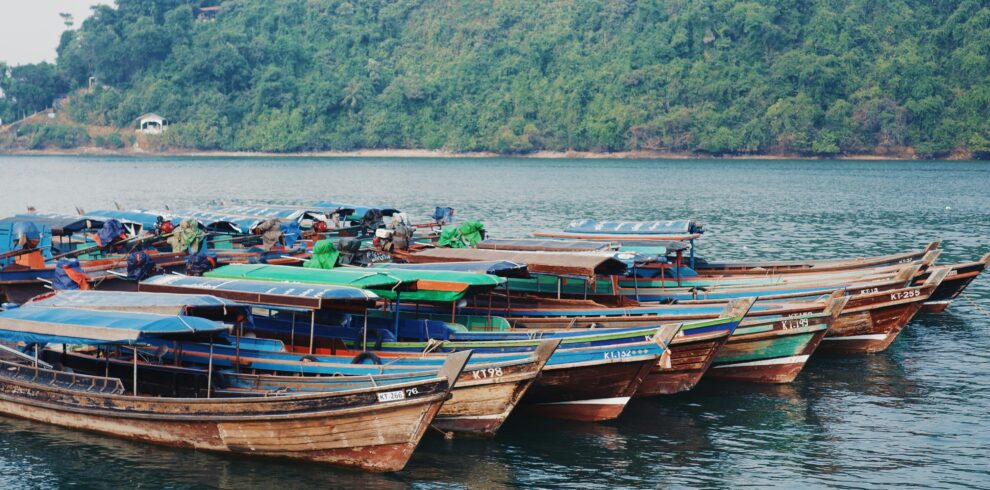
| 17:30 | Arrive at The Mera Resort, set on a small private island opposite the Moken (Sea Gypsy) village of Nyaung Mai. Check in to your beachfront bungalow. |
| 17:45 | Golden hour on the resort beach — the sun sets directly across the bay. Long exposures and silhouettes of the village longtail boats. |
| 19:00 | Dinner at the resort. Local seafood, grilled and Burmese-style. |
| 20:30 | After-dark options: astrophotography from the beach (no light pollution), bonfire portraits, or simply a quiet drink. |
| Night | Overnight at The Mera Resort (private island, beachfront bungalow, twin-share). |
Photographer’s Notes — Day 3
- On the boat: keep a microfibre cloth handy for salt spray. A polariser cuts the glare and saturates the sea on both crossings.
- Bailey Island: shoot the beach from above (small rocky bluff at the south end) for the classic turquoise-curve composition. Best from 10:30–11:30.
- Smart Island: the rounded stones make beautiful foreground texture for wide-angle landscapes. Get low.
- Mera Resort sunset: wait for the silhouettes of returning longtail boats around 18:00.
- Night sky: December is one of the clearest months in the archipelago. Bring a fast wide (f/2.8 or wider) and a sturdy tripod.
This is the cultural centrepiece of the first half of the expedition. Today we cross the bay to spend the morning at Dome Nyaung Mai, one of Myeik’s surviving Moken settlements. The Moken are the original people of these seas — sea-nomads whose ancestors have read the wind and water of the Andaman for centuries. Approach this day slowly, quietly, and with your camera ready but not in a hurry.
Detailed Programme
| TIME | PROGRAMME |
| 05:45 | Optional sunrise wake-up call. Mist over the Moken village from the resort beach makes one of the strongest frames of the entire trip. |
| 07:30 | Breakfast at The Mera Resort. |
| 09:00 | Depart The Mera Resort by longtail for the short crossing to Dome Nyaung Mai (Moken Sea Gypsy Village). |
| 09:30 | Arrive at the village. Welcome from the elders. Walk slowly through the stilted houses, the boat-building beach and the drying racks. Your guide will broker introductions and translate. |
| 10:30 | Open time with the community. Photograph fishermen mending nets, women weaving pandanus, children playing on the foreshore. Documentary and portrait work — both candid and posed. |
| 12:00 | Depart Dome Nyaung Mai back to The Mera Resort. |
| 12:30 | Arrive back at The Mera Resort. Lunch on the resort beach. |
| 13:30 | Check-out from The Mera Resort. Pack up at leisure. |
| 15:00 | Depart The Mera Resort for the return crossing to Myeik (approx. 2 hours on calm December seas). |
| 17:00 | Arrive back at Myeik pier. Short drive to the hotel; freshen up. |
| 19:00 | Dinner at a local seafood restaurant — fresh crab, prawns, the day’s snapper. |
| 20:30 | Evening at leisure. Optional walk along the waterfront for long-exposure work. |
| Night | Overnight in Myeik (3-star hotel, twin-share with breakfast). |
Photographer’s Notes — Day 4 (Most important cultural morning of the first half)
- Permission first, always. Your guide will introduce you to the village headman on arrival and ask whether the morning’s photography is welcome. The answer is almost always yes, but the asking matters.
- Children and women: please do not photograph children alone without a clearly affirmative parent. Women generally do not mind being photographed at work (weaving, cooking, mending nets) but please ask before any close portrait.
- Inside houses: do not photograph inside private homes unless explicitly invited.
- Pay it back: the village has a small communal donation box at the headman’s house. We suggest USD 5–10 per guest as a quiet contribution. We do not pay individuals for portraits — it changes the community dynamic.
- Lenses: a 35mm or 50mm prime is ideal for environmental portraits at conversational distance. A 70–200mm telephoto can compress longtail boats against the headland from the foreshore. Avoid super-long lenses for sniping — they work against the relationship you are trying to build.
- Best light: 09:30–11:00 is soft from the side. By noon the contrast becomes harsh — that is naturally the time we leave.
- Sound and presence: keep your shutter quiet, work in single-shot, do not stand in working spaces. The Moken who like being photographed are usually the ones already smiling at you — start there.
- After-care: your guide can email a small selection of edited portraits back to the village (coordinated through the elders). This is part of the relationship and we encourage all guests to participate.
A relaxed final Myeik morning of culture and craft, then a short flight south to Kawthaung — the wind-blown, vividly photogenic frontier town at the very southern tip of Myanmar. The afternoon is built around photographing one of the country’s most unusual urban panoramas and an early night before the boat departs.
Detailed Programme
| TIME | PROGRAMME |
| 07:30 | Breakfast at your hotel. Pack and check out (luggage stored at reception). |
| 09:00 | Pick-up for the Myeik cultural circuit. |
| 09:30 | Visit the Myeik Pearl Showroom — the city has been a pearling centre for over a century. Beautiful product photography under controlled light. |
| 10:30 | Local Souvenir Shop — handicrafts, longyi fabrics, lacquerware. Strong colour and texture frames. |
| 11:15 | Local Dessert Shop — Burmese sweets made in the open: jaggery, coconut, palm sugar. Excellent process photography. |
| 12:00 | Lunch at a Myanmar Traditional Food Restaurant — your last chance for a full Burmese curry spread. |
| 13:30 | Transfer to Myeik Airport for the short domestic flight south to Kawthaung (KAW). Flight time approximately 45 minutes. |
| 15:30 (Kaw) | Meet at Kawthaung Airport by your local guide and driver. Welcome briefing and transfer into town. |
| 16:00 | Kawthaung sightseeing photo circuit (compressed into the late-afternoon golden window): |
| • | Bayinnaung Point — the bronze statue of King Bayinnaung pointing across the Pakchan estuary towards Thailand. Iconic frame. |
| • | Pyi Daw Aye Pagoda — a quietly beautiful hilltop pagoda with sweeping views over the estuary and Ranong (Thailand) on the far bank. |
| • | Kawthaung fish market — late-afternoon arrivals from the trawlers, abundant working-life portrait material, intense colour and texture. |
| • | Cape Bayinnaung viewpoint — sweeping panorama at the meeting of the Andaman Sea and the Pakchan estuary; first taste of golden hour. |
| 17:30 | Golden hour at the Cape Bayinnaung viewpoint — long-lens compression of the estuary, the Thai shoreline, and the fleet returning. |
| 18:30 | Check-in at your Kawthaung 3-star hotel. Brief rest. |
| 19:00 | Welcome dinner at a local restaurant — full seafood spread and a programme briefing for the four-night charter ahead. |
| Night | Overnight in Kawthaung hotel. Pack a small day-bag for the boat (main luggage goes aboard with you). |
Photographer’s Notes — Day 5
- The Bayinnaung statue is at its best in late afternoon when the light comes off the estuary. A 35–70mm covers it; a longer lens lets you separate it from background boats.
- Pyi Daw Aye Pagoda: arrive at least 45 minutes before sunset to scout. The estuary view to the west takes warm side-light beautifully.
- Kawthaung fish market: be respectful — workers are quick and tired by late afternoon. A 35mm prime in single-shot keeps you unobtrusive. Don’t block the cart paths.
- Lenses for the boat tomorrow: pack a versatile zoom (24–105 or 24–70 + 70–200) on top of your bag — the boat departs early and you will not want to unpack to switch.
Board the liveaboard and head north into the southern Mergui. By late afternoon we are anchored off Nyaung Wee, the first of three further Moken villages, with the entire golden hour and an evening of astrophotography ahead of us.
Detailed Programme
| TIME | PROGRAMME |
| 06:30 | Early breakfast at the hotel. Check out. |
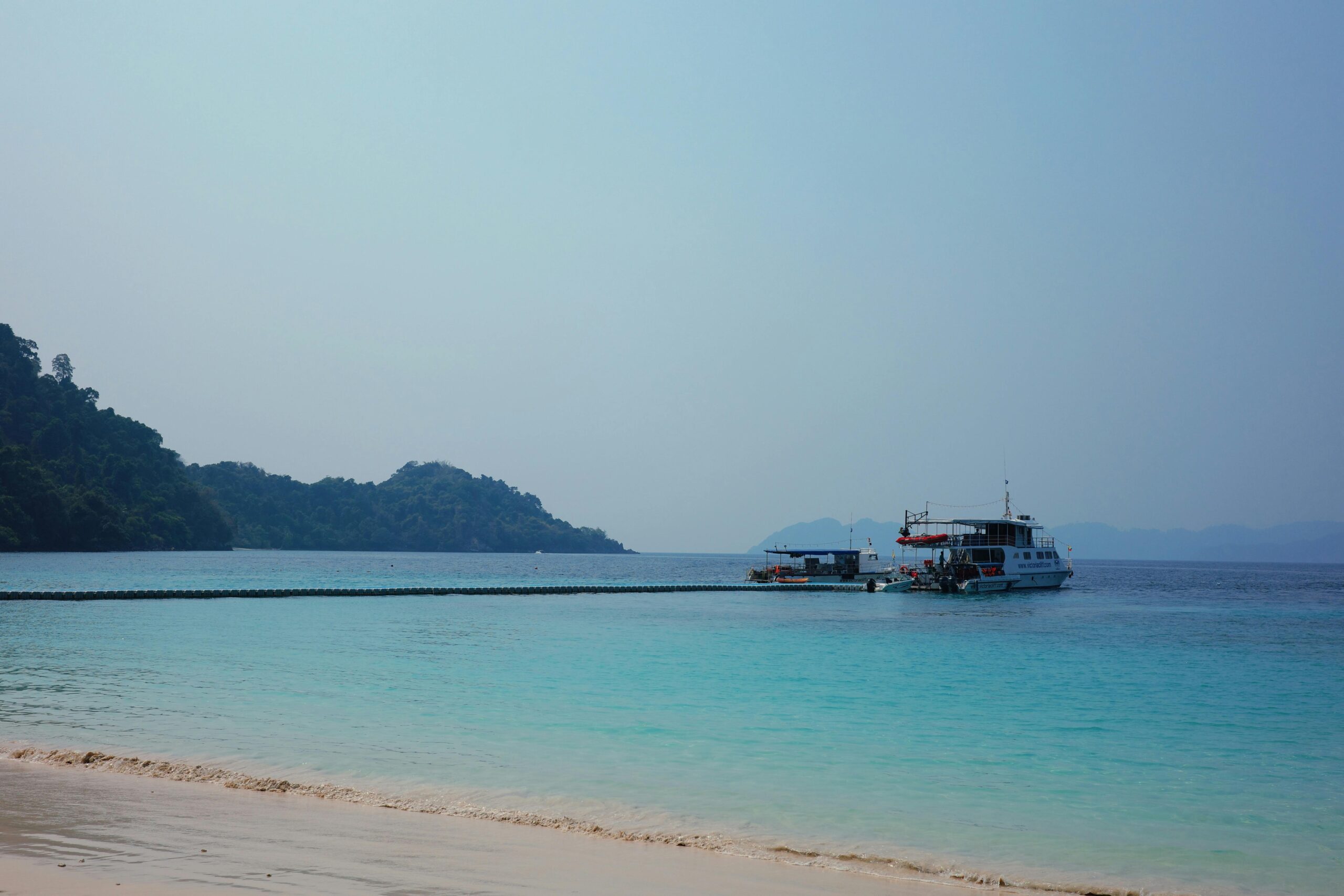
| 07:30 | Transfer to the Kawthaung jetty. Board your private liveaboard, cabin assignments, safety briefing and boat tour. |
| 08:30 | Cast off. Depart Kawthaung northbound through the Pakchan estuary. |
| 09:30 | Enter the southern Mergui Archipelago. The estuary opens into pale-blue sea, the karst islands begin, and the wake-frothed bow becomes a permanent shooting position. |
| 11:00 | Mid-morning brunch on the deck. Cruising photography from the foredeck — fishing fleets, distant islands, mist burning off the karst. |
| 13:00 | Lunch on board as we continue north. Optional rest in cabin. |
| 15:30 | Approach Nyaung Wee Island. The Moken community here lives in a stilted village along the foreshore — the boats lined up on the beach are visible from a long way out. |
| 16:00 | Anchor in the bay. Tender ashore for an introductory cultural visit. Welcome with the village elders, slow walk along the foreshore, soft-light environmental photography. |
| 18:00 | Return to the boat for dinner and golden hour from the upper deck — the village silhouetted against the sunset across the bay is one of the trip’s signature frames. |
| 19:30 | Dinner on board. Briefing for Day 7. |
| 21:00 | After-dark astrophotography session from the upper deck. The Mergui has some of the darkest skies in Southeast Asia. |
| Night | Overnight at anchor in the bay off Nyaung Wee Island. |
Photographer’s Notes — Day 6
- First contact at Nyaung Wee is intentionally short — a chance to be seen, to greet the elders and to let the community see us. Photography is light: ambient scenes, working life, no posed portraits yet.
- The introductory walk is also reconnaissance — note positions for tomorrow’s longer session: the boat-building beach, the drying racks, the water’s edge where the children play in the late afternoon.
- Sunset from the upper deck: a 70–200mm compresses the village against the headland; the captain will reposition the boat if there is a better angle.
- Astrophotography: tripod on the upper deck, the boat is usually still enough for 15–25 second exposures at f/2.8. Bring an intervalometer if you want a time-lapse of the village lights and stars.
The full morning at Nyaung Wee is the cultural and photographic centerpiece of the liveaboard. In the afternoon we cross to a second, smaller Moken settlement at Jar Own.
Detailed Programme
| TIME | PROGRAMME |
| 05:45 | Optional sunrise wake-up on the upper deck. First light on the Nyaung Wee village from the boat — one of the trip’s strongest frames. |
| 07:00 | Breakfast on board. |
| 08:30 | Tender ashore for the full photographic morning at Nyaung Wee. Slow walk, ambient documentary, environmental portraits with elders, fishermen, women weaving, children at the water’s edge. |
| 11:30 | Return to the boat. Cool off. Process and review the morning’s work. |
| 12:30 | Lunch on board as we weigh anchor and cruise to Jar Own. |
| 15:00 | Arrive in the bay off Jar Own Village — a smaller Moken settlement, with a distinct character: more spread out along the shoreline, different boat shapes, a slightly more nomadic feel. |
| 15:30 | Tender ashore for an introductory cultural visit and a slow late-afternoon photo walk through Jar Own. |
| 17:30 | Return to the boat for golden hour from the deck. |
| 18:30 | Sunset across the bay — long exposures, silhouettes of Moken longtails. |
| 19:30 | Dinner on board. Briefing for Day 8. |
| 21:00 | Optional second astrophotography session from the upper deck. |
| Night | Overnight at anchor in the bay off Jar Own Village. |
Photographer’s Notes — Day 7 (Most important shooting morning of the trip)
- Lenses for the Nyaung Wee morning: a 35mm or 50mm prime is the workhorse for conversational-distance environmental portraits. A 70–200mm telephoto compresses boats and the foreshore. Avoid super-telephoto for portraits — the closer working distance is part of the relationship.
- Approach: walk in slowly, follow your guide’s introductions, sit with the elders before reaching for the camera. The best portraits today will come from people who already nodded at you the night before.
- Ethics — please re-read: ask permission before any close portrait. Do not photograph children alone without an obviously affirmative parent. Do not photograph inside private homes unless explicitly invited. Do not pay individuals for portraits — a quiet community contribution (USD 10–15 per guest into the village’s communal box) is the correct way.
- Best light: 09:00–11:00 is the strongest window. After 11:00 the contrast becomes harsh and the heat sends both villagers and photographers indoors — which is why we leave at 11:30.
- Jar Own in the afternoon: a different visual feel from Nyaung Wee. Pay attention to the boat shapes, which differ subtly between Moken settlements and are a strong photographic motif in their own right.
- After-care: your guide can email a curated set of edited portraits back to both villages after the trip. We strongly encourage all guests to participate; it is part of the relationship.
The most expedition-like day. A morning of unhurried photography at Jar Own, an afternoon crossing further into the archipelago, and an evening at Jar Lann — the most remote of the four villages on this programme.
Detailed Programme
| TIME | PROGRAMME |
| 05:45 | Optional sunrise from the upper deck — Jar Own under first light. |
| 07:00 | Breakfast on board. |
| 08:30 | Second photo session ashore at Jar Own — building on yesterday’s introductions, deeper portraits and detail work (hands, tools, boats, drying racks). |
| 11:00 | Return to the boat. Pack up, weigh anchor. |
| 11:30 | Set course for Jar Lann Village. Cruising photography on deck. |
| 13:00 | Lunch on board as we cruise. Optional snorkel stop at a remote reef en route — depending on tides and the captain’s call (15–45 minutes in the water). |
| 15:30 | Arrive in the bay off Jar Lann Village — the most remote of the four communities, deeper into the archipelago, and visibly less visited. |
| 16:00 | Tender ashore. Long, slow late-afternoon photo session with the Jar Lann community: foreshore, boat-building, fishing returns at golden hour. |
| 18:00 | Golden hour ashore — strong directional light along the beach. The captain stays close in case you want to switch to deck shots. |
| 19:00 | Tender back to the boat. Dinner on deck. |
| 21:00 | Final astrophotography session of the trip. Bioluminescent plankton sometimes appears in the bay — keep an eye on the water around the hull. |
| Night | Overnight at anchor in the bay off Jar Lann Village. |
Photographer’s Notes — Day 8
- Jar Lann is the most remote of the four settlements. Expect fewer outside influences, simpler structures, and (most rewardingly) more authentic working scenes. Approach quietly.
- Late-afternoon shooting at Jar Lann is the trip’s strongest single light window. The setting sun comes in at a sharp angle across the foreshore — perfect for skin tones, water and the wooden boats together in one frame.
- Save card space and battery for tonight’s astrophotography — Jar Lann’s bay is exceptionally dark.
A slow last morning at anchor, a daylight crossing back to Kawthaung, and a short border boat across the Pakchan estuary into Ranong, Thailand — from where an evening flight returns us to Yangon for the final night. The estuary crossing itself is one of the most distinctive frames of the trip: two countries within sight of each other, working ferry traffic, longtail boats moving in both directions under two flags.
Detailed Programme
| TIME | PROGRAMME |
| 06:00 | Final sunrise from the upper deck. First light hits Jar Lann’s headland around 06:15 — be in position by 06:00 for the strongest frames. |
| 07:30 | Breakfast on board. Captain’s farewell briefing on the day’s crossing and the border procedure. |
| 08:30 | Cast off Jar Lann. Set course south to Kawthaung. |
| 09:00 | Cruising photography from the upper and foredeck — the Mergui karst at full daylight is its own visual genre. Polariser on, salt-spray cloth ready. |
| 11:00 | Optional last snorkel or swim stop at a remote reef en route, subject to tide and the captain’s call (15–30 minutes in the water). |
| 12:30 | Farewell lunch on board as we approach the Pakchan estuary. |
| 14:30 | Arrive at Kawthaung jetty. Disembark, group photo on the dock, farewells with the boat crew. Customary tip envelope presented to the captain on behalf of the group. |
| 15:00 | Myanmar immigration clearance at Kawthaung port — passport exit stamps. Allow 30–45 minutes. |
| 15:45 | Board a private longtail boat for the short crossing across the Pakchan estuary — the famous 30-minute frontier boat ride between Myanmar and Thailand. |
| 16:15 | Arrive at Saphan Pla pier, Ranong, Thailand. Thai immigration clearance (visa-on-arrival or stamp-on-arrival for most nationalities). |
| 16:45 | Transfer by private vehicle to Ranong Airport (UNN) — approximately 20 minutes. |
| 18:00 | Evening domestic flight from Ranong to Bangkok (approx. 1 hr 20 min), then onward connection to Yangon. |
| From 22:30 | Arrival back at Yangon International Airport (RGN). Private transfer to your central Yangon 4-star hotel. Late check-in. |
| Night | Overnight in central Yangon (4-star hotel, twin-share). |
Photographer’s Notes — Day 9
- The Pakchan estuary crossing at midday is the trip’s most distinctive border frame — two flags within sight of each other, working ferries, longtail traffic. A 24–70mm covers everything you need; keep one body accessible on deck.
- Cruising south: the karst-island views are different in colour and contrast from the morning crossings on Days 6 and 8 — softer haze, longer shadows. Worth one last deck shoot.
- Border-crossing gear protocol: do NOT photograph immigration posts, military positions or uniformed officers on either side of the Pakchan. Cameras off and stowed at both immigration windows.
- Cards and batteries: this is your last working day — back up your cards to a laptop or external SSD on board before disembarkation. The boat has 220V power.
A relaxed final morning. Depending on your international flight time, either a slow breakfast and a final downtown walk, or a brief transfer straight to the airport. We say goodbye in Yangon, where the trip began.
Detailed Programme
| TIME | PROGRAMME |
| 08:00 | Breakfast at the hotel. |
| 09:30 | Optional final morning circuit (subject to your departure time): a return to Bogyoke Aung San Market for last-minute pieces, or a quiet walk down to the Strand and the Yangon waterfront for one last colonial-grid frame. |
| 12:30 | Farewell lunch — a final Burmese curry spread at a long-established traditional restaurant near the hotel. |
| 14:00 | Hotel check-out. Bags loaded into your private vehicle. |
| From 14:30 | Transfer to Yangon International Airport (RGN) for your onward international flight. Allow 3 hours for international check-in. |
| End of the Myanmar Photographer’s Grand Expedition. |
Photographer’s Notes — Day 10
- If your international flight departs in the morning, the programme converts to a direct hotel-to-airport transfer after breakfast.
- Last chance for analog souvenirs: Bogyoke Market is excellent for hand-woven longyis, lacquerware bowls and old colonial-era books. Bring small US-dollar notes and crisp Myanmar kyat.
Itinerary Note
Timings are indicative and may be adjusted by the captain in response to weather, tide and sea conditions. Village visits are coordinated with elders and may shift by a few hours in either direction. Border-crossing times can vary depending on port traffic and immigration staffing on the day. Any changes will be of comparable quality and within the same Moken-village zone.
Includes/Excludes
Services Included
- All airport meet-and-greet services and private transfers in Yangon, Myeik, Kawthaung and Ranong throughout the 10 days.
- Two (2) nights’ accommodation at a centrally located 4-star hotel in Yangon (Days 1 and 9), twin-share with breakfast.
- Two (2) nights’ accommodation at a centrally located 3-star hotel in Myeik (Days 2 and 4), twin-share with breakfast.
- One (1) night’s accommodation at The Mera Resort (private island, beachfront bungalow) opposite the Moken village (Day 3), twin-share with breakfast.
- One (1) night’s accommodation at a 3-star hotel in Kawthaung (Day 5), twin-share with breakfast.
- Private full-charter liveaboard vessel for 3 sleeping nights aboard (Days 6, 7, 8), including twin-share air-conditioned cabins with private bathroom; captain, engineer, deckhands, chef and dedicated cultural guide; all meals onboard, soft drinks, tea/coffee, drinking water and fresh fruit; tender transfers between the liveaboard and each village landing; snorkel masks, life jackets and beach towels onboard.
- Private speedboat charter for the Day 3 and Day 4 Myeik archipelago crossings.
- Day 9 disembarkation transfers: Kawthaung port to Saphan Pla pier (private border longtail), and Saphan Pla pier to Ranong Airport (private vehicle).
- Dedicated English-speaking photographer-experienced local guide for the full 10 days.
- All Myanmar government and Mergui / Tanintharyi marine zone permits and fees.
- All island landing fees, pagoda entrance fees and city sightseeing entrance fees (Shwedagon, Sule, Kandawgyi, Thein Daw Gyi, Yan Kin Taung, Pyi Daw Aye, Cape Bayinnaung viewpoint).
- All village landing permissions, pre-arranged through the headmen of Dome Nyaung Mai, Nyaung Wee, Jar Own and Jar Lann.
- All meals as specified across the programme — 9 breakfasts, 9 lunches, 9 dinners — including soft drinks, drinking water and fresh fruit.
- Community contribution coordination (your guide will collect and present contributions to each village headman on your behalf).
- Post-trip ‘photos back to the village’ service: a curated set of A4 prints delivered to each of the four Moken villages.
- 24/7 emergency satellite contact line with the tour operator.
Services Excluded
- • International flights into Yangon and out of Yangon.
- • Domestic flights: Yangon – Myeik (Day 2, approx. USD 90–140 one way), Myeik – Kawthaung (Day 5, approx. USD 50–80 one way), and Ranong – Bangkok – Yangon (Day 9, approx. USD 180–260). All can be booked on your behalf at cost on request.
- • Myanmar tourist visa (e-Visa, approx. USD 50, obtained online before arrival).
- • Thailand visa or visa-on-arrival fees, if applicable to your nationality.
- • Travel and medical insurance, including trip-cancellation and medical evacuation cover (mandatory — please bring proof of cover).
- • Alcoholic beverages onboard and at hotels (a bar fridge can be pre-stocked at cost on the liveaboard on request).
- • Personal expenses, laundry, satellite phone calls and onboard Wi-Fi upgrades.
- • Single-cabin / single-room supplement (see pricing).
- • Tips for guides, drivers, boat crew, captain and resort staff.
- • Suggested community contributions at the Moken villages (USD 10–15 per guest per village, voluntary; coordinated by your guide).
- • Underwater camera rental and drone permit fees, if required.
- • Any service arising from itinerary changes due to weather, tide, sea condition or force majeure.
Things to know
Timings are indicative and may be adjusted by the captain in response to weather, tide and sea conditions. Village visits are coordinated with elders and may shift by a few hours in either direction. Border-crossing times can vary depending on port traffic and immigration staffing on the day. Any changes will be of comparable quality and within the same Moken-village zone.
“Born on the boat, named on the boat, married on the boat, buried at sea.”
The Moken are an Austronesian indigenous people whose ancestors have moved between the islands of the Mergui Archipelago for at least several centuries — and quite possibly far longer. Traditionally entirely seaborne, generations of Moken families lived nine to ten months of the year aboard hand-carved single-masted boats called ‘kabang’, coming ashore only during the heaviest of the southwest monsoon months. Their oral history, navigation by stars and currents, breath-hold free-diving abilities and intimate knowledge of the reef ecosystems are among the most distinctive in maritime Southeast Asia.
Today, the Moken communities at Dome Nyaung Mai (Myeik), Nyaung Wee, Jar Own and Jar Lann live in semi-permanent stilt-house villages along the foreshore, still fishing the surrounding waters, still building their own boats from local timber, and still passing down their language and their songs. Each of the four villages on this expedition has its own character, its own headman, and its own slightly different boat-building tradition — which makes visiting all four across seven days the most rewarding way to understand the community.
We have worked with these villages for years. The elders know our captains and our guide, and our charters contribute meaningfully to the village funds through a transparent community-contribution box (no individual portrait fees, no cash to children). Every guest’s images can — if they choose — be sent back to the villages after the trip; over time these have become part of the villages’ own collective record.
Why December?
December is the heart of the cool dry season on Myanmar’s Tanintharyi coast. Daytime temperatures hover around 28–31°C, humidity is low, rainfall is minimal, and the northeast monsoon flattens the sea inside the archipelago — meaning safe crossings, clear underwater visibility (typically 10–20 m), and exceptionally clean skies through the late afternoon. Sunrise around 06:15 and sunset around 17:55 give long, workable golden hours at both ends of the day, and the Milky Way (winter portion) is visible from the boat through the night.
Recommended Camera Kit
- Camera body with weather sealing — strongly recommended (salt air, humidity, occasional spray).
- Wide zoom (16–35mm) — landscapes, village interiors, environmental scenes.
- Standard zoom (24–70mm or 24–105mm) — the workhorse for the villages and the deck.
- Short telephoto (70–200mm f/2.8 ideally) — boat-to-village compression, candid portraits, deck-based wildlife.
- Fast prime (35mm or 50mm, f/1.8 or faster) — environmental portraits, low-light interiors, after-dark.
- Polarising filter — essential on every cruising day.
- ND filter (6 or 10 stop) — for long-exposure deck and shoreline work.
- Sturdy travel tripod with rubber feet (for the deck) — astrophotography, sunrise, sunset.
- Intervalometer — for star trails and time-lapses.
- Plenty of microfibre cloths, silica gel sachets, a dry bag and a hard case.
- Spare batteries — the boat has 220V charging at limited outlets; charge whenever you sit down.
- More memory than you think you need — guests typically shoot 80–150GB over the ten days.
- Optional: GoPro/underwater housing for the snorkel stops. Drone use must be cleared with the captain in advance and is not permitted in village airspace.
Cultural Photography — Ground Rules
- Permission first, every time. Your guide and the captain will broker introductions with the village headman on arrival. The answer is almost always yes, but the asking is the point.
- No individual cash for portraits. We make a transparent community contribution through the village’s communal box (suggested USD 10–15 per guest per village).
- No photographs inside private homes unless explicitly invited.
- Children & women: ask the responsible adult first. A polite gesture (pointing at the camera, raising eyebrows) is universally understood.
- Keep the shutter quiet. Single-shot or quiet mode. Do not chimp loudly. Do not stand in working spaces.
- Stay with the group during the village walks. The villages are small and easy to overrun if photographers spread out.
- Dress modestly — shoulders and knees covered, easy-off footwear.
- After-care: opt in to the photo-back-to-village programme. We coordinate a curated set of A4 prints sent to each village after the trip.
Light Plan — Daily Routine
- Sunrise: from the upper deck or hotel terrace at 06:00–06:30. On the boat, the captain will swing the bow if you need a different angle.
- Mid-morning village shoots (09:00–11:00) — soft side-light, the day’s strongest documentary window.
- Cruising photography between villages — polarised wide and tele alike, salt-spray cloth ready.
- Late-afternoon village or deck shoots (15:30–17:30) — strong directional light, especially at Jar Lann on Day 8.
- Sunset (17:30–18:10) — long-lens compression from the deck, silhouettes ashore.
- After-dark: astrophotography from the deck, three nights out of four aboard.
- A non-refundable deposit of 40% confirms the charter (higher than land tours to secure the boat).
- Full balance is due 60 days before the tour start date.
- Bookings within 60 days of departure require full payment at time of booking.
- Cancellation more than 60 days before departure: deposit forfeited, balance refunded.
- Cancellation 30–60 days before departure: 50% of total fare forfeited.
- Cancellation 14–29 days before departure: 75% of total fare forfeited.
- Cancellation within 14 days of departure: 100% of total fare forfeited.
- Comprehensive travel insurance including trip-cancellation and medical-evacuation cover is mandatory.
- Passports must have at least 6 months’ validity at entry into Thailand and at least one full clean page.
- Myanmar e-Visa must permit an exit at the Kawthaung port crossing — please confirm this at the time of visa application.
- Most Western nationalities receive a 30-day Thailand entry stamp on arrival at Saphan Pla pier (Ranong); please verify your own nationality’s requirements.
- Currency: keep small US-dollar notes for any incidentals at the port; Thai baht becomes useful from Saphan Pla onwards. ATMs are available at Ranong Airport.
- Time zone change: Myanmar is 30 minutes behind Thailand. We reset watches on the longtail.
- Recommended onward flight: book a Ranong → Bangkok → Yangon departure no earlier than 18:00 to keep the day stress-free. We do not recommend same-day onward international connections from Bangkok.
- Luggage: the longtail can carry standard checked bags. We recommend a 30L photographic backpack worn on you and a single soft duffel/suitcase as checked luggage.
- Camera kit as listed in the Field Guide (with weather sealing where possible).
- Tripod with rubber feet (essential for upper-deck astrophotography and Shwedagon blue hour).
- Reef-safe sun cream, sun hat and polarised sunglasses.
- Light, breathable, quick-drying clothing — 4–5 sets is enough; laundry is available in Yangon and Myeik.
- A light layer for early-morning deck and air-conditioned cabins, plus one warm layer for Yangon evenings.
- Modest, respectful clothing for the Moken village visits and for Shwedagon (shoulders and knees covered).
- Comfortable footwear plus sandals or reef shoes for beach landings; easy-off footwear for pagoda visits.
- Swimwear, a quick-dry towel and (optional) a light rash vest.
- Dry bag and a hard case for camera gear during boat transfers.
- Personal medication, motion-sickness tablets, and a small first-aid kit.
- Small US-dollar notes (clean, sub-USD-100 denominations) for tips and the village contributions. ATMs in Kawthaung and Myeik are unreliable; Yangon ATMs are dependable.
- A headlamp (red-light mode useful for astrophotography).
- Power bank for phone and accessory charging on deck.
Outbound Tour Manager
To reserve the charter for your December 2026 group, please reply with your preferred 10-day window, number of guests and any special photographic interests. Because the liveaboard is fully chartered to your group, lead-time confirmation is important — we recommend a non-refundable deposit at least 90 days before departure to secure the December dates.
All itineraries can be lightly customised — additional village visits, a longer snorkelling programme, a Bayinnaung Cape sunrise instead of sunset, an extra night ashore at the start or end, or a Yangon Bagan / Inle Lake pre- or post-trip extension can all be added on request.
We look forward to welcoming you to Burma for one of the most rewarding photographic weeks in our Southeast Asian calendar.